Can Craps Systems Win Long Term? How to Check the Claims
Evidence standard · House edge · Short-run variance · System claims
A craps system can organize which bets you make, how much you risk, and when you stop. It cannot turn negative-expectation wagers into a reliable long-term income. The useful question is not whether a system won once; it is whether its claim survives correct math and enough recorded decisions.
No betting pattern erases the house edge
Progressions, regressions, hedges, stop points, and switching between the right and wrong sides change the distribution of session results. Unless a promotion or rule error genuinely changes the wager, they do not change the underlying expectation of each bet.
What a craps system can legitimately do
- Limit the number of simultaneous bets.
- Define a repeatable collect, press, or regress schedule.
- Set a maximum layout and prevent impulsive additions.
- Make wins and losses easier to record and audit.
- Create a style of play a recreational player finds understandable.
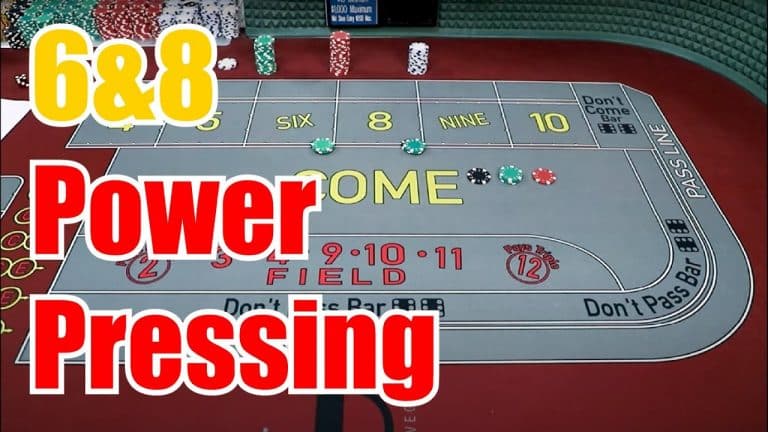
Those are real benefits, but none is a player advantage. A system using only Place 6 and 8 still faces the 1.515% house edge on each resolved Place bet. Turning the bets off after a hit pauses exposure while they remain off; it does not make the next 7 more or less likely.
Why one winning trip proves very little
Negative expectation does not mean every player loses every session. Variance produces short winning runs, sometimes dramatic ones. If 100 people try a weak system, the winners are more likely to praise it publicly than the losers are to document every failed attempt. Testimonials therefore select for memorable outcomes, not reliable evidence.
The same problem appears when a seller shows a few sessions but omits total action, losing sessions, table rules, commissions, and the point at which the method was changed. A screenshot of chips is not a ledger.
A practical claim-checking test
| Claim | What to ask for | Warning sign |
|---|---|---|
| “This bet is due” | How does a prior independent roll alter the next-roll combinations? | No mechanism; only a recent streak |
| “The hedge lowers the edge” | Show the net result for every outcome and the weighted expectation | Only winning outcomes are shown |
| “It wins long term” | Complete, timestamped results with total money wagered | Selected sessions or testimonials |
| “Press with house money” | Compare the pressed amount with banking the payout | Winnings are treated as if they no longer belong to the player |
| “Professional method” | Define professional and identify the actual source of income | Teaching or product sales are presented as proof of table profit |
Are there professional craps players?
“Professional” is an imprecise label. Someone may earn money writing, dealing, producing videos, selling equipment, or teaching casino games. That does not establish that the person earns a sustainable profit from ordinary craps bets. A claimed playing advantage requires its own evidence; reputation and job title are not substitutes.
The Place 6/8 on-off example
One on-off method places 6 and 8, turns both off after a hit, and also turns them off after five neutral rolls on the mistaken premise that 7 is due. The stopping rule may reduce exposure, but its prediction is the gambler’s fallacy. On fair independent dice, 7 remains six combinations out of 36 on the next roll regardless of the preceding sequence.
Judge any method with the same standard: spell out every rule, calculate every outcome, include commissions, record all sessions, and separate entertainment preferences from profit claims. Our distribution and variance guide explains why short samples mislead, while the craps systems hub audits named methods without promising an advantage.
A neutral-roll waiting rule changes time exposed
With $6 Place bets on both 6 and 8 working, a 6/8 pays $7 profit, 7 loses $12, and other totals do not resolve these wagers. Expected result per working roll is (10 × $7 − 6 × $12) ÷ 36 = −$2/36, about −5.6 cents. Five neutral rolls followed by another working roll do not change those next-roll combinations.
Calling both bets off after five neutral rolls prevents them from winning or losing while off. It does not make the next working roll cheaper or forecast when to resume. Taking them down returns the $12 stake; merely calling them off leaves it on the layout. Compare two schedules by counting working rolls, accepted wagers and final cash, not by labeling one paused layout as a mathematical advantage.
Why winning most short cycles can still lose money
For an isolated cycle, put $6 on 6 and $6 on 8, keep both working, and stop at the first 6, 8 or 7. Other totals only delay the decision. There are ten combinations for 6 or 8 and six for 7, so the cycle wins with probability 10/16, or 62.5%.
A winning cycle collects $7 profit and can return its $12 stake. A losing cycle loses $12. Expected net result is (10/16 × $7) − (6/16 × $12) = −$0.125. That is a loss expectation despite winning more cycles than losing. It applies to this two-bet, stop-at-first-decision plan, not to every schedule called a system.
A seller reporting only a win percentage leaves out the size of the losses. Ask for both amounts and the stopping rule. Use the Place bet guide to distinguish one resolved wager from a layout containing several bets.