

Why an Electronic Craps Payout May Look Short
Electronic settlement · Commission and rounding · Dispute steps
An electronic craps payout can look short because the display separates returned stake from profit, deducts a disclosed commission, rounds fractional credits, treats Odds as off, or uses a different paytable. Check the machine’s help and transaction history before concluding the game malfunctioned.
First preserve the evidence
Do not start another cycle. Note the game number, terminal, time, wager, result, displayed balance, and paytable. Use the attendant or dispute button and keep the ticket or account record until the issue is resolved.
Six common explanations
| What you see | Possible explanation | What to check |
|---|---|---|
| Win smaller than mental calculation | Profit shown separately from returned stake | “To 1” versus “for 1” and credit-meter movement |
| Buy or Lay result reduced | Commission deducted | Vig base, rate, timing, and rounding |
| Odds did not win | Odds were off for that roll | ON/OFF indicator and working default |
| Fraction missing | Whole-credit rounding or breakage | Minimum denomination and help rule |
| Field/proposition win differs | Different paytable | 2/12 Field price and proposition return |
| Bet vanished before result | Wager was not confirmed before lockout or was rejected | Bet history and confirmation state |
Example: commission ambiguity on a Buy 4
A $20 Buy 4 has a $40 gross win at true odds of 2 to 1. If a disclosed 5% commission is based on the $20 wager and charged only on a win, the vig is $1 and net profit is $39. If a system instead charges 5% of the $40 win, the deduction is $2 and net profit is $38.
Those are materially different rules. The screen must disclose which method applies. Never infer the commission base from the phrase “5% vig” alone.
A whole-credit unit can hide a fractional payout
At standard 7-to-6 Place 6 terms, a $6 wager wins $7 profit and a $12 wager wins $14. A hypothetical $7 wager has a mathematical proportional profit of $49 ÷ 6, or $8.1666…; a terminal that uses whole credits cannot show that exact amount as a whole-credit payout. Some games reject an awkward unit, while others use a disclosed rounding or breakage rule. Do not assume which applies from the bet-entry screen alone.
Before confirming a nonstandard amount, open the help screen for accepted units and rounding. If the machine accepted $7, save the wager record and compare its actual credit with that rule. On a disputed settlement, report the exact amount wagered and the rule shown at that terminal; saying only “Place 6 pays 7 to 6” leaves the fractional-credit question unanswered.
Profit, return, and credit balance
- Wager: credits committed before the result.
- Profit: winnings after the stake is excluded and disclosed fees are deducted.
- Total return: returned winning stake plus profit.
- Balance change: total account movement after every winning, losing, pushed, and off component is settled.
A multi-part Horn, line-plus-Odds wager, or combination bet can contain winning, losing, pushed, and inactive pieces on the same roll. Reconstruct every component rather than comparing the final balance with one printed payout.
How to dispute a payout
- Stop play and leave the credits or ticket intact.
- Open the paytable and capture the rule if property policy permits.
- Call the attendant and identify the exact transaction.
- Ask for the machine or game history and a supervisor review.
- Request the casino’s written dispute process.
- If unresolved, contact the named gaming regulator using the machine, property, time, and documentation.
Do not rely on an old lawsuit summary. Software versions, approved configurations, paytables, and legal outcomes change. The current terminal rules and regulator record control the transaction in front of you.
Preventing the next surprise
- Read help before the first wager.
- Test unfamiliar commission rules with the minimum.
- Use dealer-friendly units even when the screen accepts any amount.
- Check working indicators before each come-out.
- Review total exposure and the bet ticket before lockout.
- Cash out and preserve the ticket when leaving.
Use the craps payout table for reference, compare Roll to Win, and read how regulated electronic games are reviewed.
Rebuild one transaction line by line
Suppose $18 is on Place 6 and 6 rolls. At the standard 7-to-6 payoff, profit is $21. If the wager stays working, the terminal may add only $21 to the available balance while the original $18 remains shown on the layout. If the wager is taken down, the combined return is $39: $21 profit plus the $18 stake.
Reconcile the display in this order: starting balance, amount moved to the layout, result, profit or loss for each component, stakes left working, and ending balance. A correct screen can look short when the comparison mistakenly expects a working stake to appear in both the balance and the layout.
Current regulatory examples
- Washington State Gambling Commission: electronic table games—approved ETG paytables must be consistent with approved rules, and terminals must display clear game information before a wager.
- Washington State Gambling Commission: Roll to Win approval and rules—a current example of configuration-specific wagers and payouts.
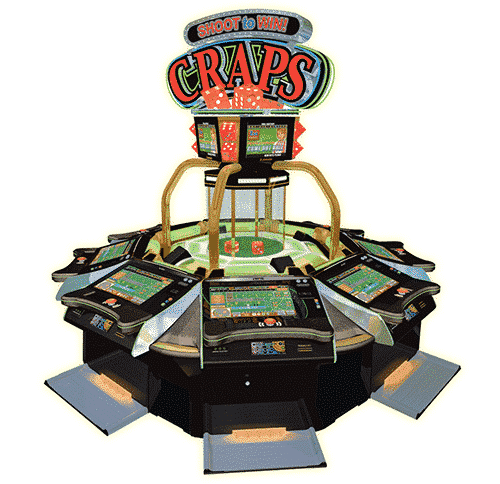






Not to nitpick, but the photo used to tease this article is an Aruze machine, not Interblock.
Thank you for pointing this out, image has now been updated!