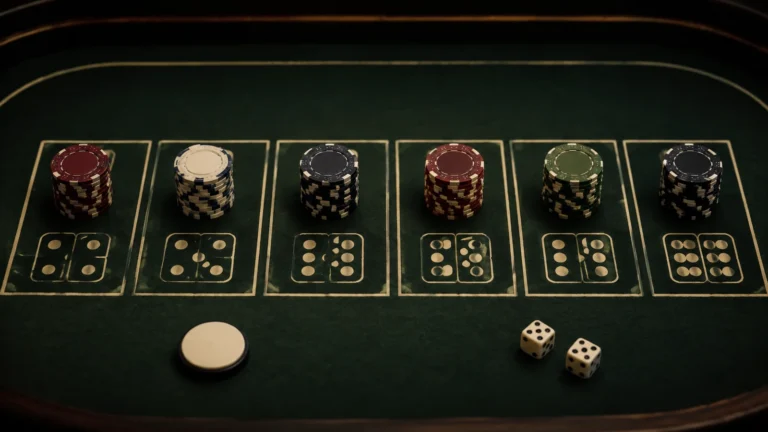
How to Budget a Gambling Vacation Without Chasing Losses
Set the gambling budget from what you can afford to lose—not from how many hours you hope to play. A casino trip should still be fully paid for if every gambling dollar is lost. Travel home, lodging, food, medication, bills and emergency money never belong in the bankroll.
Build two separate vacation budgets
| Trip money | Gambling money |
|---|---|
| Transport and return travel | A fixed discretionary loss ceiling |
| Hotel, resort fees and deposits | Divided into daily or session envelopes |
| Food, tips, shows and local transport | Never replenished from trip or emergency funds |
| Medication and emergency reserve | Assumed lost for planning purposes |
Price the non-gambling trip first, including taxes and fees. Add an emergency reserve that stays outside the casino plan. Only then decide whether any discretionary money remains for gambling.
A practical five-step worksheet
- Choose the total loss ceiling. Write one amount you can lose without financial consequences.
- Divide it before travelling. Split the ceiling by day or planned session. Four $100 envelopes are safer than treating $400 as one open bankroll.
- Add time limits. A session end time prevents one bad stretch from consuming the whole day.
- Decide the stop procedure. When an envelope is empty, leave the gambling area. Do not visit an ATM or move money from another day.
- Protect what remains. Unused money goes home. It is not a “win,” a rebate or permission to raise the next session’s stakes.
Example: a four-night trip
Suppose the traveller can safely allocate $400 to gambling after the rest of the vacation and emergency reserve are fully funded. One plan is four $100 daily limits, with no borrowing between days. Another is eight $50 sessions. The second plan may create more stopping points, but neither plan guarantees eight sessions: normal variance can end one early.
The useful calculation is not “How much do I need to gamble for four hours?” No bankroll guarantees a duration. The useful question is “How much am I willing to spend on this entertainment today?”
Estimate cost without pretending variance disappears
Expected loss is approximately total resolved action multiplied by house edge. If $10 in Pass Line wagers is resolved 50 times, the flat-bet action is $500. At a 1.41% house edge, the theoretical average cost of that flat action is about $7.05. The actual session may finish far above or below that number.
Odds wagers add no house edge to the odds portion when paid at true odds, but they increase the cash exposed and the size of swings. Maximum odds is not automatically suitable for a vacation budget. A player with a small loss ceiling may prefer smaller odds or no odds even though the blended percentage is higher.
Check the table before the trip
Table minimums and odds limits vary by property, time and demand. A planned $10 game may be unavailable on a busy night. Call the casino shortly before travelling, but treat any quoted minimum as a snapshot rather than a promise.
Have a non-gambling alternative if the only open table exceeds your plan. Do not double the budget because the desired game costs more than expected.
Remove easy ways to break the plan
- Leave credit cards and the main debit card secured if they are not needed for travel.
- Do not use casino credit, cash advances or “just one” ATM withdrawal.
- Track chips bought, chips cashed and cash remaining after every session.
- Avoid combining heavy drinking with financial decisions.
- Do not use poker, slots or sports betting to fill time after reaching the craps limit. That is still gambling exposure.
Plan the trip so gambling is not the only activity
Reserve meals, shows, pool time, museums, walks or time with travelling companions before arrival. A full itinerary makes it easier to leave a table and prevents a lost session from feeling like the entire vacation failed.
Sam’s travel perspective
After visiting more than 65 brick-and-mortar casinos, I have learned that the dangerous moment is often not the first buy-in. It is the decision to reach for more money because the planned session ended early. The table will still be there tomorrow; protecting the rest of the trip is the better decision.
Warning signs that require more than a worksheet
Cancel or stop gambling if you are hiding the budget, borrowing, chasing, repeatedly breaking limits or depending on a win to pay for the trip. Use the casino’s exclusion tools and the support contacts in CrapsPit’s responsible gambling guide. A budget is not a treatment for loss of control.
Bottom line
Pay for the vacation first, isolate an affordable gambling loss ceiling, divide it into hard stops and never refill it from travel money. The goal is not to make a bankroll last through a predetermined number of hours. It is to return home with every essential expense and obligation protected.