
Live-table roles · Who handles each bet · How to ask for help
A traditional craps crew includes two base dealers, a stickperson, and a boxperson or floor supervisor. Staffing varies, but the job is the same: control the dice, book and settle wagers, protect the game, and keep a fast table accurate.
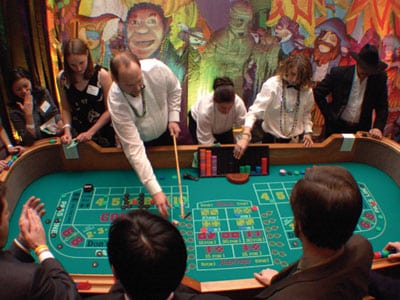
Sam’s practical advice
Ask the person responsible for your side of the table. A clear “Dealer, is my 6 working?” is easier to resolve than shouting across the layout. Most mistakes are fixed quickly when you raise them before the next roll and state the wager and amount calmly.
Craps crew roles at a glance
| Role | Typical position | Main responsibilities |
|---|---|---|
| Base dealer | One on either side of the boxperson, serving one half of the table | Books and pays bets, exchanges chips, handles buy-ins, tracks player-position wagers |
| Stickperson | Center, opposite the box position | Controls the dice, calls rolls, books many center bets, moves dice to the shooter |
| Boxperson | Seated at the center | Supervises the game, verifies procedures and transactions, protects bankroll and layout |
| Floor supervisor | Over one or more tables | Handles rulings, disputes, ratings, staffing, and game oversight |
Not every table has every position filled. A low-activity or modern operation may run without a seated boxperson, with a floor supervisor covering that function. Crew members also rotate positions and take breaks according to the property’s staffing plan; there is no universal rotation interval.
The base dealers
Each base dealer is responsible for the player positions on one half of the table. The dealer tracks chips by position, books Place, Buy, Lay, and Odds wagers, pays winners, collects losses, and maintains the bankroll stored in the table rack.
Players normally make reachable self-service bets—such as Pass, Don’t Pass, Come, Don’t Come, and Field—by placing their own chips in the marked area. For dealer-controlled bets, put chips in the Come area between rolls and say the amount, number, and bet type: “$12 each on 6 and 8, please.” Wait for acknowledgment.
Buying in through a dealer
Place cash flat on the layout after a roll, never directly into a dealer’s hand and never on top of active wagers. The dealer spreads and counts it where the transaction can be seen, a supervisor verifies it under house procedure, and the cash enters the drop box through the table slot. The dealer pushes the purchased chips to the apron in front of you.
A buy-in is not an automatic wager
Suppose you lay $100 cash on the table after a roll and the dealer pushes $100 in chips to your apron. Count the chips, then put them in your rail. Nothing is working merely because the chips were exchanged. A $10 Pass Line bet begins only when you deliberately place or call it under the table’s rules and the crew accepts it before the throw.
Keep the cash exchange separate from a bet request. If you need smaller chips for a $12 Place 6, ask for suitable change at a calm moment, then state “$12 Place 6” and let the base dealer position it. If the dealer is still paying the previous roll, wait; hands in the layout can obscure another player’s wager and make a correct settlement harder to reconstruct.
The stickperson
The stickperson uses the stick to gather and move dice without reaching across the betting layout. They offer dice to the next shooter, announce when the dice are out, watch the throw, call the total, and help control the pace of the game.
The center of the layout usually contains one-roll and proposition bets that players cannot reach. The stickperson commonly books those verbal wagers and repeats them so the player, crew, and surveillance can understand the action. At some tables a base dealer may relay or book them; follow the crew’s direction.
Do not throw chips at the stickperson or into the center. Place chips where your dealer instructs, state the wager clearly, and make sure it is acknowledged before the dice move.
The boxperson and floor supervisor
The boxperson traditionally sits between the two base dealers and oversees the table bankroll, dice, chips, buy-ins, payouts, and compliance with house procedure. Despite a common story, the title is not a reliable reference to the table’s drop box; it is simply the established name of the supervisory role.
A floor supervisor may oversee several games and can perform or review the boxperson’s functions. Larger disputes, player-rating questions, unusual payouts, and rulings may move from the dealer to the boxperson, then to the floor or pit manager. The exact chain varies by casino.
Who should you ask?
| Your question | Start with |
|---|---|
| “How much is my Place 6?” | The base dealer on your side |
| “Was that roll a 9?” | Listen for the stickperson’s call; ask your dealer if unclear |
| “Is my bet working on the come-out?” | Your base dealer, before the dice move |
| “I think my payout is short.” | Your base dealer immediately; request a supervisor if unresolved |
| “Can I take a photo or use my phone?” | The floor supervisor; property policies vary |
| “Can you rate my play?” | Dealer or floor supervisor, ideally before play starts |
How the crew protects an accurate game
- Repeating verbal bets and change requests before accepting them;
- keeping chips arranged so amounts and owners remain visible;
- calling the dice result and moving the puck;
- settling losing wagers before paying winners in an established order;
- checking dice that leave the table or appear damaged;
- stopping late bets, hands in the layout, or unclear action;
- calling a supervisor when a transaction or ruling needs review.
A busy crew can be fast without being careless, but players help by using correct chip amounts, stating bets plainly, and keeping hands out when the dice are moving. Review the craps table layout, table limits, and craps etiquette before your first live game.

Hi just wanted to ask if the don’t pass player are allowed to remove then put back their lay odd during the game where supposedly don’t pass is the opposite of pass line where players can remove then put back their odds behind anytime?
Rommel, thanks for your post. When talking about the Free Odds bet, you can make or pick up the Free Odds bet at any time for both the Pass Line and Don’t Pass. However, the Flat Pass Line and Flat Don’t Pass bets are different, so be sure to review our articles about the Pass Line and Don’t Pass to understand the difference between the Flat bets. Again, you can pick up or make a Free Odds for bet for both the Pass Line and Don’t Pass at any time. Thanks again for your post and good luck at the tables.