Sucker Bets in Craps: What the Math Actually Says
High-edge bets · Equivalent alternatives · Paytable check · Expected cost
“Sucker bet” is table slang, not a useful way to judge another player. A better definition is a wager that charges much more than a readily available alternative for similar action—or whose attractive payout hides a large house edge.
Compare price, not embarrassment
A recreational player may knowingly pay for a high-volatility bet. The problem is not breaking an unwritten status rule; it is making the wager without seeing its probability, payout, and cheaper substitutes.
Big 6/8 versus Place 6/8
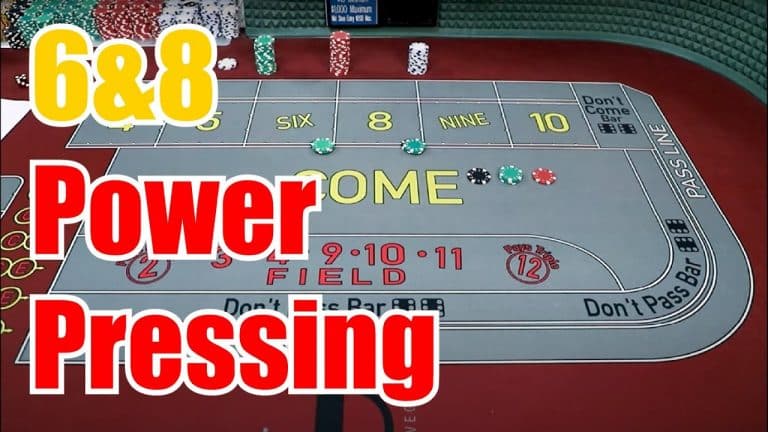
Big 6 and Big 8 commonly pay even money. Each chosen number has five combinations and 7 has six, producing a 9.09% house edge. A Place 6 or 8 resolves on the same number-versus-7 contest but pays 7 to 6, reducing the edge to about 1.52%. When both are available under those paytables, Place is plainly better.
| Bet and common payout | House edge | Lower-cost comparison |
|---|---|---|
| Big 6/8 at 1:1 | 9.09% | Place 6/8 at 7:6: 1.52% |
| Hard 6/8 at 9:1 | 9.09% | Place 6/8 for less volatile number action |
| Hard 4/10 at 7:1 | 11.11% | Buy 4/10 when commission terms are favorable |
| Specific 2/12 at 30:1 | 13.89% | No equivalent low-edge one-roll jackpot |
| Any 7 at 4:1 | 16.67% | Don’t Pass for lower-cost seven-side action over a contract |
Paytables vary. With all other Field payouts unchanged, paying triple on 12 costs less than paying double, and Buy/Lay commission timing can materially change value. Read the felt and ask before placing chips.
Why payout size misleads
A Hard 8 at 9 to 1 sounds generous, but it wins only on 4-4. It loses on six combinations of 7 and four easy-8 combinations. The fair payout is 10 to 1, so the missing unit creates the 9.09% edge. Large odds printed on the layout are not the same as fair odds.
Compare expected cost on the same basis
Use $12 as an equal-stake comparison so Place 6/8 fits standard $6 units. Under the common paytables above, expected cost is about $1.09 per resolved Big 6/8, $0.18 per resolved Place 6/8, $1.09 per resolved Hard 6/8, and $2 per Any Seven roll. Actual accepted minimums can differ by bet. These are averages over repeated decisions, not the amount every individual wager will lose.
The time basis matters. Any 7 resolves on the next roll, while Place and Hardway wagers may survive neutral totals. Compare house edge per resolved wager for price, then separately consider how often you repeat or leave the wager working when estimating session exposure.
A five-question wager check
- Exactly what wins, loses, and pushes?
- How many dice combinations create each result?
- What does this table pay?
- What is the expected loss per dollar?
- Is there another wager on the same result at a better price?
Do not let fear of looking inexperienced push you into silence. Ask the crew about procedure, then verify the mathematics in the craps payout table, Big 6/8 guide, and Hardways guide.
What repeated action costs
Use ten completed $6 decisions as a simple comparison. At the standard 7-to-6 Place 6 payoff, the expected cost is about $0.09 per resolved wager, or roughly $0.91 across ten decisions. Ten separate $6 Any 7 bets cost $1 in expectation each at a 4-to-1 payout, or $10 across the ten rolls.
Both plans put $60 through the game, but their expected costs differ by about $9.09. Their timing and volatility also differ: Any 7 settles every roll, while Place 6 can remain through neutral totals until 6 or 7 decides it.
This is why a session comparison needs both price and repetition. A player who knowingly buys a few high-variance rolls is making an entertainment choice; repeating them rapidly can turn a small-looking stake into substantial total action.
A valid Place amount and the cost of one working roll
A standard $12 Place 6 pays $14 profit. For one roll while it works, five combinations earn $14 and six sevens lose $12; the other 25 combinations leave it unresolved. Expected result is (5 × $14 − 6 × $12) ÷ 36, or about −$0.056 per working roll. The roughly $0.18 figure above instead describes one completed 6-versus-7 decision, which can take several rolls.
A $12 Any Seven at 4 to 1 settles on every roll and costs $2 in expectation each time. Do not multiply a per-decision Place edge by every neutral roll as though the wager resolved, or compare that number with a one-roll proposition without stating the basis. Valid units, actual paytables and repetition all belong in the cost calculation. Ask how a nonstandard amount would be paid before assuming a $10 Place 6 receives the clean proportional payoff.